The Headline Is a Doorway, Not a Summary
Learn how to read a news headline without mistaking its emphasis for the whole report, and find the details that change what a claim means.

A headline about a school closing can make the decision sound final, even if the story says officials are still weighing options. Reading a news headline carefully means treating it as an invitation to inspect the report, not as a smaller version of the whole thing. The wording points toward one angle; the article supplies the boundaries.
What part of the story gets the doorway?
A headline has little room, so it chooses. It may foreground a striking number, a person’s reaction, a disputed claim, or a possible consequence. Those choices help readers decide what to open, but they also leave other parts of the report outside the frame.
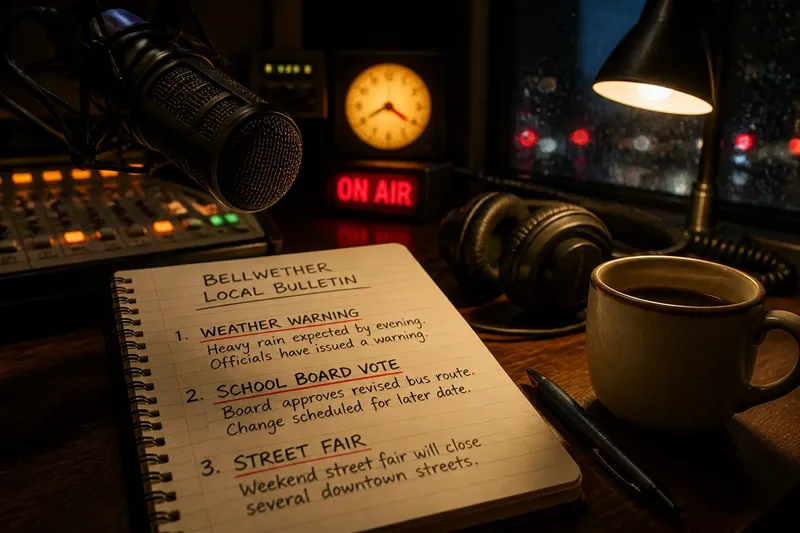
Notice the subject and the verb. “Council considers closing two branches” describes a discussion. “Two branches face closure” makes the consequence more prominent. Neither phrase, by itself, tells you whether a decision has been made, who supports it, or what conditions could change it.
That does not make the headline deceptive. Compression is part of the format. The useful question is narrower: what specific part of the story is being emphasized, and what information would I need before treating that emphasis as the whole account?
Which small words change the claim?
Qualifiers can carry more meaning than the dramatic noun. Look for words such as “may,” “could,” “planned,” “proposed,” “according to,” and “preliminary.” They tell you whether a statement is established, attributed, or still uncertain.
Pay attention to verbs that describe process. “Announces,” “approves,” “seeks,” and “considers” are not interchangeable. A headline that says a company “plans” a change does not say the change has happened. The story may explain what remains before it takes effect.
Numbers need similar care. A headline may select a count or a rate because it gives readers a quick sense of scale. In the article, check what is being counted, what period is covered, and what comparison—if any—makes the figure meaningful. A number without its unit or frame can point readers toward the wrong conclusion.
How can you read a news headline without stopping there?
Use a brief sequence of checks. It keeps your attention on the report’s actual claim instead of making you guess from the wording.
- Identify the headline’s main claim. Put it into plain language without adding a cause or consequence that the words do not state.
- Read the opening paragraphs. Check whether they identify the event, the relevant people or organizations, and what is known so far.
- Find the support for the central claim. Notice whether the article points to a document, a named source, direct observation, or an attributed statement.
- Check the limits. Look for caveats, missing information, disputed details, or conditions that narrow the headline’s apparent certainty.
- Compare the headline with the article’s ending or later sections. Important context may appear after the opening, especially when the story explains what happens next.
- Rephrase the claim at the end. If your wording is stronger or broader than the article’s evidence, bring it back into line.
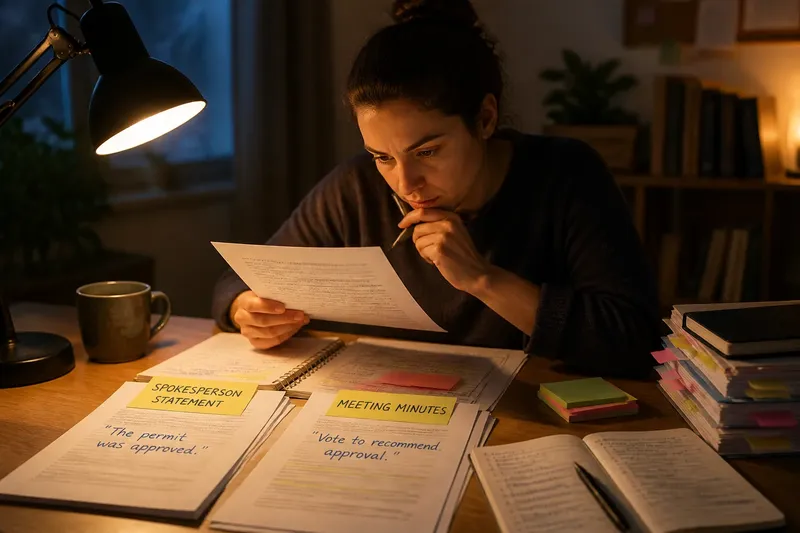
Say you see a headline reading, “City to replace downtown parking with a public plaza.” Imagine the article says a committee has recommended the plaza, while the city council has not voted. The careful reading is not that the plaza is certain; it is that a recommendation is under consideration. That distinction changes what you can fairly repeat to someone else.
What should you check after opening the story?
Look for the sentence or passage that supports the headline’s most important wording. If the headline says a policy “cuts access,” find what the report says is changing and for whom. The body may describe a narrower effect, a planned change, or a claim made by one participant rather than a settled outcome.
Then check attribution. “The agency says the system is safe” is a report of the agency’s position; it is not the same sentence as “the system is safe.” Articles often quote competing views, and the headline may select one because it is central to the news event. Read enough to tell whose claim it is and what evidence the story supplies.
Watch for the difference between a direct quotation and the reporter’s account. A vivid phrase in quotation marks may belong to a source with a particular interest. That does not make it irrelevant, but it does mean the quote should not silently become the article’s own conclusion in your retelling.
Finally, look for what the story says it cannot establish. A report may note that a cause is unclear, that figures are preliminary, or that a decision is pending. Such limits are part of the story, not fine print to discard after the headline has caught your eye.
Why might the headline and the article feel different?
Headlines are often edited separately from the body. Editors may tighten phrasing for space, clarify a subject, or foreground the latest development. The article may hold several strands together, while the headline needs to present one quickly. A difference in emphasis can therefore be ordinary, even when it deserves a closer read.
Sometimes a headline is updated as an event develops, while a reader is looking at a saved link or an older share. If the wording seems out of step with the text, check the article’s update note and publication details. A changed headline can alter the emphasis without changing every paragraph beneath it.
Also notice what the headline does not promise. It may raise a question without answering it, or use a person’s name to signal that the story concerns them rather than establish that they caused an event. Opening the article helps distinguish a topic from a conclusion.
What questions help you read a headline carefully?
Does a headline state a fact or report someone’s claim?
Look for attribution such as “officials say” or “according to the filing,” then check how the article supports that account. Keep the source attached when you repeat the claim.
Does “could” mean the event is likely?
Not by itself. Read the article for the conditions, evidence, and alternatives behind the possibility, and avoid turning a scenario into a prediction.
What if the headline seems stronger than the story?
Find the passage that supports its strongest verb or noun and compare the scope. If the body gives a narrower account, describe the narrower account rather than the headline’s broader impression.
Should you share a story after reading only the headline?
For a claim you plan to pass along, read enough of the report to understand its attribution and limits. If you cannot do that, share the link without presenting the headline as confirmed context.
How do you carry the distinction into a conversation?
Use language that preserves the article’s degree of certainty. “The report says the board is considering a change” is more precise than “the board changed the rules” when no decision has been made. Small verbs keep a developing story from becoming firmer in each retelling.
It also helps to separate what the headline made you expect from what the story actually established. You might say, “The headline focuses on the proposed closure; the article says the vote is still ahead.” That sentence is short, but it gives another reader the missing boundary.
A headline remains useful: it tells you where the newsroom has placed the emphasis and gives you a reason to look closer. Read it as a doorway, then let the article show you what lies beyond it. When you pass the story on, carry its limits along with its central claim.