The News Bulletin Before the Breaking Alert
A news bulletin’s order helps listeners move from urgent updates to context and consequence, making a sequence easier to follow without mistaking placement for importance.
Imagine a local radio bulletin opening with a storm warning, moving to a school-board decision, and ending with a transit update. The order is not decoration: it gives listeners a route through the news before any breaking alert interrupts it. To read a news bulletin well, notice what the sequence asks you to understand first, what it connects next, and what it leaves until later.
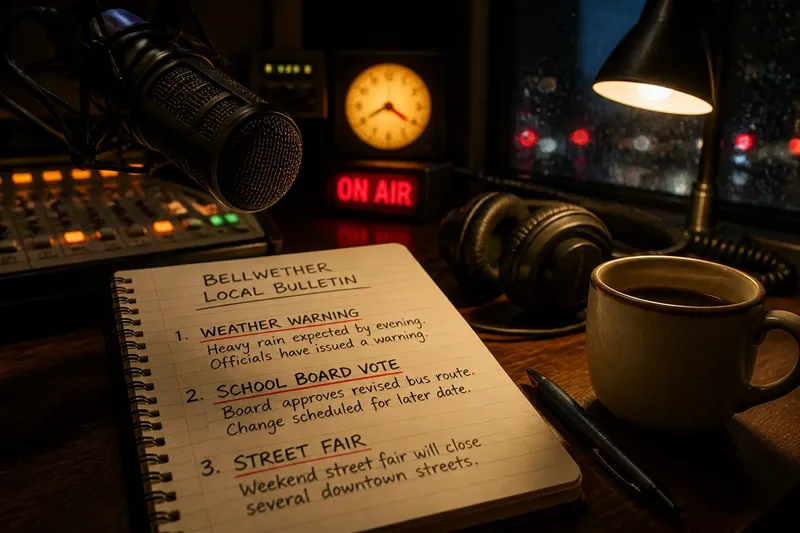
Consider an invented situation in the fictional town of Bellwether. Heavy rain is expected, the school board has voted to change a bus route, and a weekend street fair will affect downtown traffic. A station editor has only a short bulletin and must choose an order. Following that choice shows how the bulletin format can orient an audience without claiming that the first item is the only one that matters.
Why does a bulletin begin with one story?
In this hypothetical case, the editor leads with the rain because it may change what listeners do soon: check travel plans, avoid a flooded underpass, or look for an official update. The opening item gives the audience an immediate point of reference. It does not necessarily establish that the story is historically important or more deserving of attention than every other item.
A bulletin is a small sequence designed for listening. Unlike a page, it arrives in time: listeners cannot scan down to see what comes next, and many may join halfway through. A clear first item can help someone settle into the broadcast, while a concise transition signals when the subject changes.
The editor in Bellwether therefore makes the first report specific. It says that the town’s weather office expects heavy rain by evening and that officials have issued a warning. It avoids treating a forecast as an event already underway. The distinction matters: listeners need to know what has happened, what is expected, and who issued the information.
How does the sequence create a route?
After the weather item, the invented editor places the school-board vote. That report moves from immediate conditions to a decision with continuing effects. The board approved a revised bus route, and the change is scheduled for a later date. The sequence now gives listeners a different kind of information: not a near-term hazard, but a public decision they may need to understand or discuss.
The final item concerns the street fair, which will close several downtown streets over the weekend. It is useful but narrower in reach and timing than the weather warning. Placed last, it still receives a clear mention rather than disappearing from the bulletin. Its position reflects an editorial judgment about how the items fit together for this audience, not a universal ranking of their value.
That route has a simple shape: what may affect people soon, what a local institution has decided, and what a scheduled event will change. The sequence moves across time and civic life. It helps the listener build a mental map, provided each item is complete enough to stand on its own.
What should the transitions tell you?
Transitions are small but revealing. In the Bellwether bulletin, the weather report can end by naming the next official update time. A transition into the board story might then make the shift explicit: “The school board has also approved a change to a local bus route.” The word “also” signals another item, not a connection between rain and the vote.
That separation guards against an accidental story the facts do not support. If the editor puts two items side by side, listeners may assume that one caused or explains the other. A spoken link should make a real relationship clear, or avoid implying one. The board’s route decision does not become part of the weather story simply because it follows it.
Transitions also help the audience reset. A listener may hear the bulletin while cooking, driving, or waiting for a bus. A short cue naming the next subject can restore attention without repeating the previous item. Good sequencing respects the limits of listening: people may miss a detail, but they should still be able to tell when the bulletin has moved on.
Does placement tell you how important a story is?
It tells you something about the editor’s priorities, but not everything about a story’s importance. The opening slot often reflects urgency, expected audience relevance, or the need to explain a major development. It can also reflect practical constraints, such as a report that needs more context before the bulletin ends. Placement is evidence of editorial choice, not a complete measure of public consequence.
In the invented Bellwether case, a resident most affected by the bus-route change might reasonably consider that item the most important. A driver planning an evening trip may care most about the rain. Someone organizing the fair may focus on street closures. The bulletin’s order offers a shared route through several concerns; it cannot decide which one matters most in each listener’s life.
It is useful to ask whether the order matches the bulletin’s stated purpose. A short local update might reasonably lead with a developing safety notice. A program focused on schools might place the board decision first and explain why. The same items can form different sequences without one automatically being deceptive. What matters is whether the chosen order leaves listeners with a fair sense of what each item says and why it is included.
How can an alert change the planned sequence?
Now imagine, still within the hypothetical case, that the station receives a verified update during the broadcast: water has closed the underpass mentioned in the weather report. The editor interrupts the planned order with a brief alert, identifies the affected location, and says where listeners can find the latest official traffic information. The school-board item and fair notice may follow afterward.
This interruption changes the route because the new information is immediately actionable. It should not erase the distinction between the original forecast and the later closure. A careful bulletin names what changed, when the update arrived if that information is available, and what remains uncertain. The audience can then understand why the sequence shifted rather than hearing an unexplained jump.
When the bulletin returns to its planned items, a concise bridge helps: the station can say it is returning to the local updates, then identify the next subject. This makes the alert part of the same listening experience without pretending that all items have equal urgency or that a developing report is complete.
What questions help you read a bulletin’s order?
Why is this item first?
Ask what need the opening serves: immediate action, broad relevance, or explanation of a major change. The answer may be apparent from the item itself, or it may remain an editorial choice worth noticing.
What changes as the items move along?
Listen for shifts in timing, subject, and audience. A bulletin may move from something happening now to a decision with later effects, then to a scheduled event.
Does a transition imply a connection?
Check whether the broadcast says the stories are related or merely places them next to each other. Sequence alone does not establish cause, shared responsibility, or a common source.
What did the bulletin leave for another update?
Notice whether a report is based on a forecast, a preliminary notice, or a confirmed change. A short bulletin may omit detail, so identify what information it points listeners toward rather than treating the item as the whole story.
What does the Bellwether sequence teach?
The invented bulletin began with an expected weather problem, continued with a school-board decision, and ended with a street-fair notice. Its order supplied a route across immediate conditions, public policy, and a local event. When a verified underpass closure arrived, the editor interrupted the sequence and marked the change. Each choice shaped what a listener encountered first without settling every question of importance.
For a useful reading habit, remember the sequence as a set of editorial signals. Ask what makes the opening timely, whether each transition clarifies or blurs the relationship between items, and what the later reports add. Then separate the order from the underlying evidence: the bulletin’s structure tells you how the station arranged the news, while each item’s sourcing and context tell you what the report supports.
Next time you hear a news bulletin, try recalling its route rather than just its lead story. The sequence may reveal how the editor expects listeners to move through the day’s information, while the details within each report show what they can responsibly take away.